By Anton Afanassiev, 19 September 2026
Why do you need skilled, experienced people to stick around in a club? A few reasons come to mind right away; skilled people can teach snowcraft, they can teach you how to cross a river safely, they can teach you how to plan complicated trips, etc… But is teaching all that experienced people are good for? Resoundingly, no! Experienced folks run trips that are complicated, that may seem daunting, but are ambitious, cool, exciting. Through their experience, they make those trips work and open up opportunities for freshers to come along. This raises the ceiling for what a fresher feels is possible. In turn, they’ll eventually want to run ambitious, interesting trips and gain the skills needed to do so. But, if the ceiling is low, so is the cap for ambition. Stagnation happens, the variety of trips declines. It seems some of the oldies have noticed a marked decline in south island trips, alpine skills, and complex trips in general. In other words, the ceiling may be starting to lower.
Kathleen Griffin (Kat) and I wanted to be part of the solution to this perceived problem. Our goal would be to infuse some alpine skills into the club. Specifically, to the members most likely to pass the knowledge on, and run trips with them. The brand of alpine skills we wanted to share was glacier skills. Glacier skills involve complex rope work, team management, and require strong planning abilities. Those skills overlap with other things like alpine climbing, or even just challenging tramping trips.
Notably, Kat and I spent time living in Vancouver, Canada where we helped teach glacier skills for the Varsity Outdoor Club (VOC) at their annual glacier school. I’ve instructed four times and Kat has instructed twice. Of course, glaciers are a bit more accessible in Canada so glacier school is a bit of a bigger affair. Regardless, we thought that it would still open up a range of cool south island trips that few in the club really have the skills to do these days.
Glacier skills focus on three things:
-
Trip planning
-
Staying safe on the trip (travelling in a rope team)
-
What to do if something goes wrong (crevasse rescue)
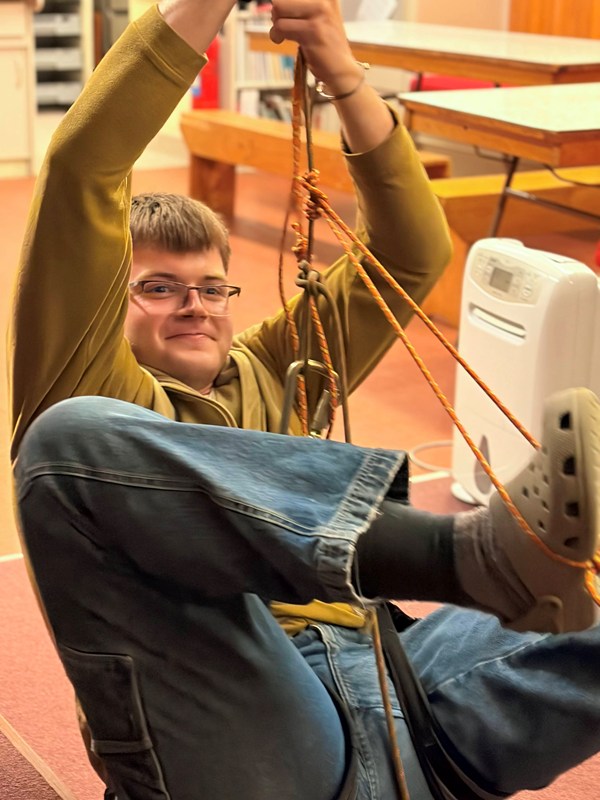
The first can be learned at home through reading weather, mapping, and other skills. The second really needs to be practiced in the field. Being roped up can be clunky and requires practice, making good navigational decisions does too, as does good communication. The third is often the most time consuming and confusing to learn. Crevasses are essentially big cracks in a glacier. These can get covered with thin layers of snow (snow bridges). A member of a rope team can fall through one of these snow bridges and be unable to get out. Crevasse rescue involves setting up haul systems to drag a fallen person out of a crevasse. These haul systems can be rather complicated, and quite confusing when there’s a lot going on and multiple strands of identical looking rope all over the place. For this reason, it’s better to set these up for the first time in a dry-school situation in town. A dry school would also double as a way to narrow down who to take on the trip (someone who’s not dedicated enough to show up to a dry school session is less likely to have the time to pass on the skills they learn). This set the structure of the course: two dry schools in town, and then a weekend in the field on Ruapehu to try out what we learned.
The dry schools went surprisingly smoothly. Sometimes, at no fault of their own, participants just can’t wrap their head around certain knots, or a pulley system. But, across the two sessions (approx. 10-12 people per) everyone managed to make a 3-1 pulley system, and most got to a 6-1 drop loop. The latter I usually don’t even cover when I teach with the VOC. From an organizer’s perspective, this actually made it a bit hard to select who should come out to Ruapehu for the field trip. Ie. all the people who came were interested and engaged. We only had space for 8 participants so we filtered by a mix of keenness, and importantly likelihood to pass skills on. We ended up choosing a team of: Tommy Bollinger, Sean Keenan, Finlay Main, Jack Goodeve, Alex Ravens, Felicity Wills, Michael Peterson, and Jackson Brown.
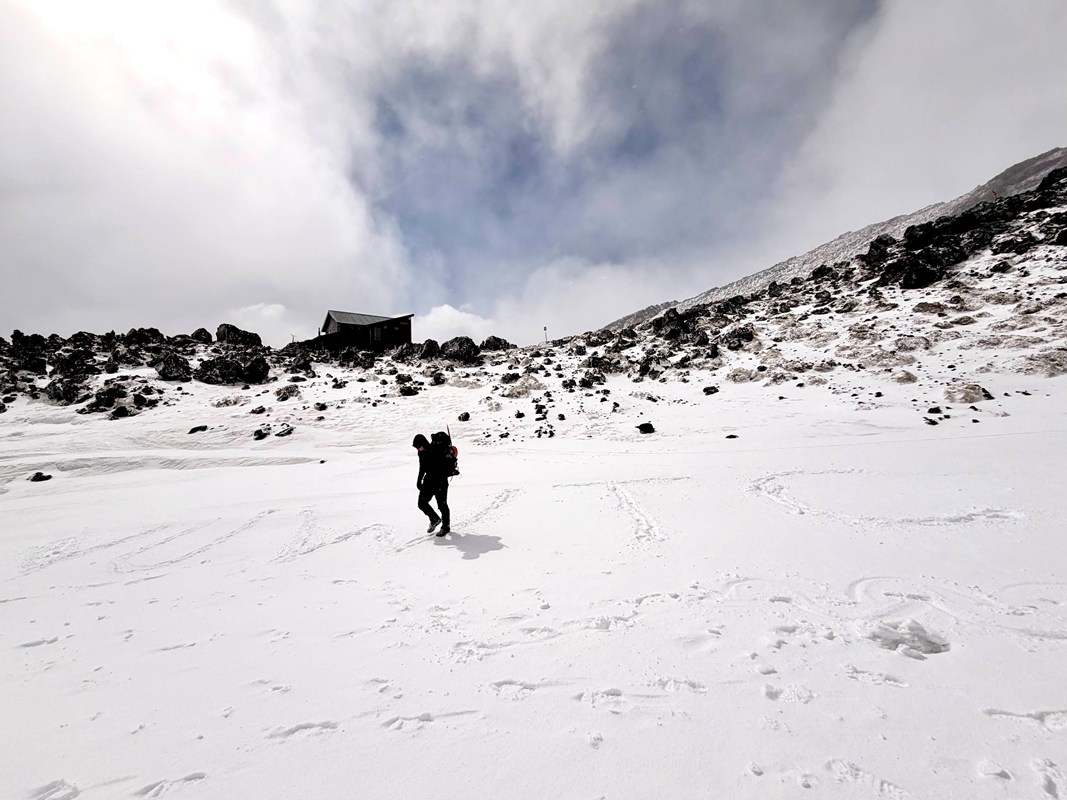
On Ruapehu, the plan was to spend two nights at the TTC Lodge (Friday and Saturday) and have at least one full day of practice in real snow. We managed to leave town remarkably early. In fact, we arrived at the lodgeGo early enough to practice some rope ascending techniques before bed, which was nice. Jumping to Saturday (our practice day), our goals were to practice building snow anchors, to walk in a rope team, and then finally combine all the knowledge in crevasse rescue practice. The latter would simulate a roped crevasse fall where the “victim” is pulled out with a haul system based on a snow anchor.
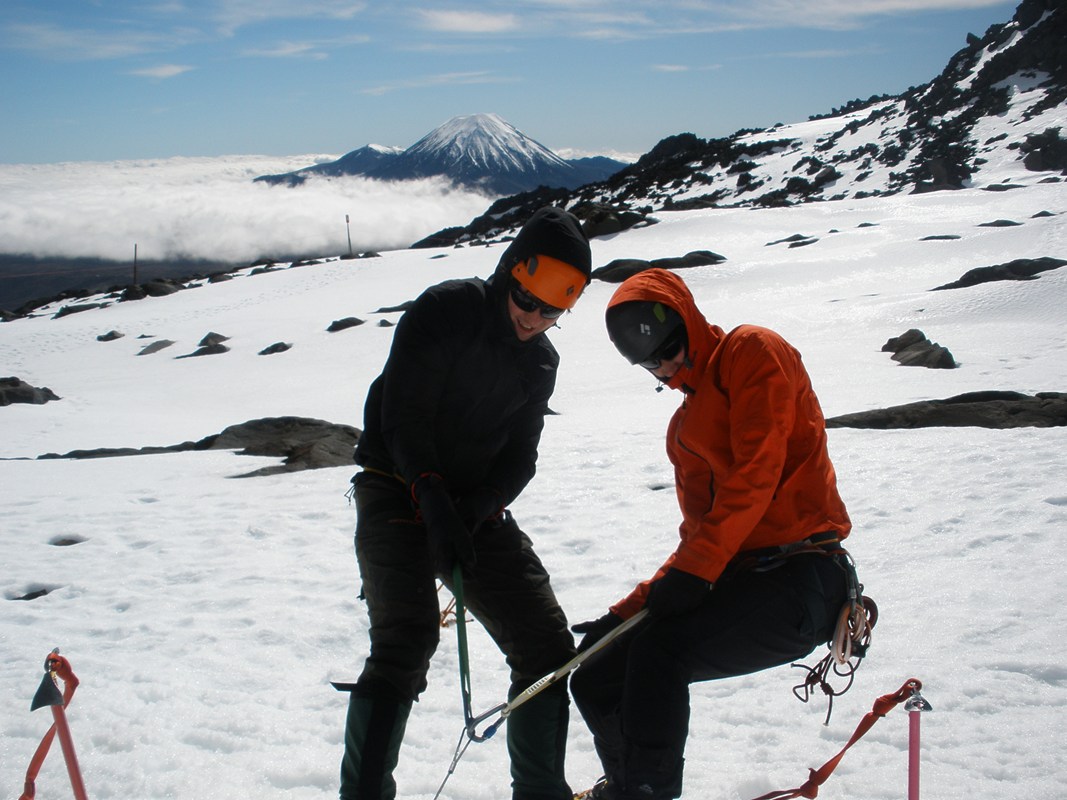
Snow anchors were fun, mostly. We practiced placing pickets, digging T-slots, burying out axes, all sorts of good stuff. There wasn’t really any ice to place ice screws, so that’s a lesson for another day. We also dug a snow bollard. Think of a huge teardrop shape you carve into the snow that you can wrap a rope around. They look kinda sketchy, but can be very strong when done right. To prove this, we did a tug test with all 10 of us pulling. I would come to regret suggesting this, or at least suggesting that we can tie in to pull with butterfly knots. All that force welded the knots, making it a Herculean effort to untie them. This was an activity that took the entire evening, with Alex seeing the most success.
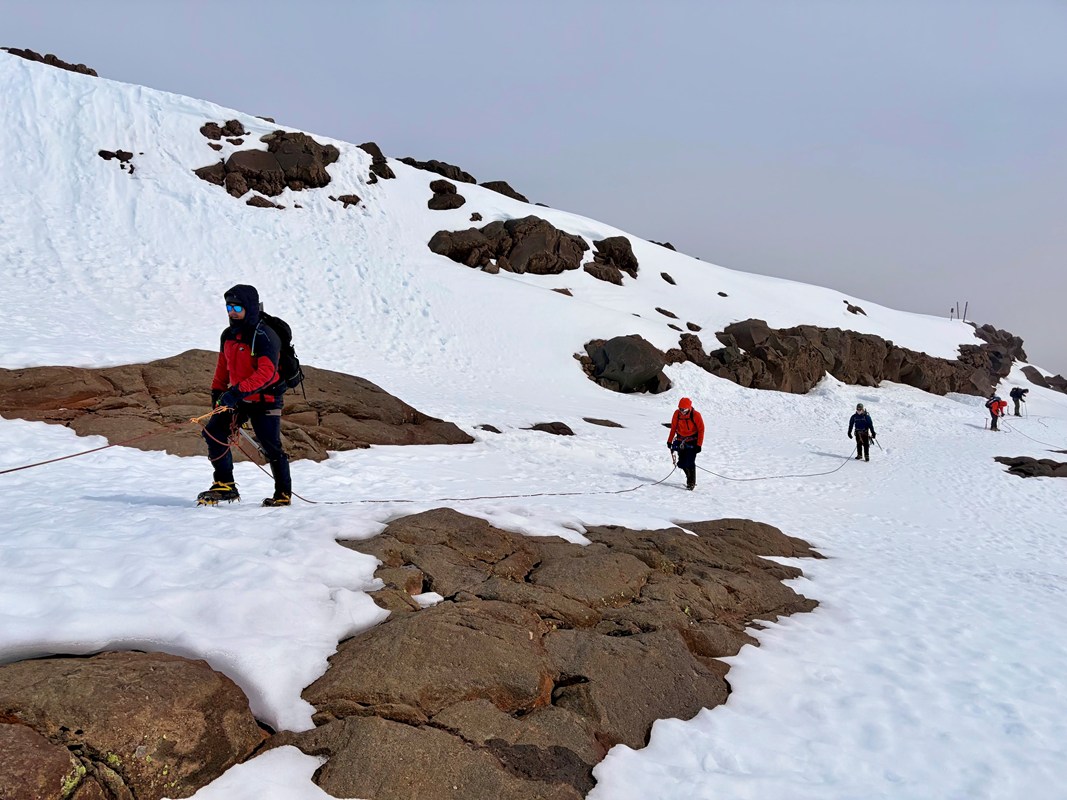
Welded rope aside we still had more practice to do, and some nasty weather was moving in. We split into two rope teams to practice roped-up travel. It takes some effort to coordinate the rope smoothly and communicate about what you’re doing (especially when you’re up to 40 meters away from the person in the rear). We took a walk around the gulley we were in, practicing probing, placing running belays, and just generally managing the rope. This seemed to go smoothly, but I wish we’d had a bit more time so everyone had a chance to work in different parts of the team. It also doesn’t help that we weren’t actually on a glacier. But, the glaciers on Ruapehu aren’t all that, and the approach time would have meant that we wouldn’t have had time to learn.
Eventually, we got to a nice wind lip that made a good sim crevasse. We started throwing members of our rope team over the side and then hauling them back out. I was happy to see my team struggle a bit with the realities of having to build and position snow anchors as well as manage the rope. It’s always a lot harder in the real world, which is why it's important to practice on actual snow. I should also mention some pretty fierce wind had picked up at this point. So everyone was getting fairly wet and cold. Despite all this, the victim was successfully extracted from the crevasse three times with varying haul systems.
Being sufficiently wet, cold, and well-practiced we headed back to the lodge. There, as we worked at untying my rope we had a few reflections. Notably, it’s pretty hard to set up these systems in the actual snow, where you have to work around the environment, all while it's actively working against you. We also brainstormed various ways the participants could pass some of these skills on. By the way, if you as a reader are keen on learning stuff like this, there’s a list of names just a few paragraphs above who could help you get started. Go bother them.
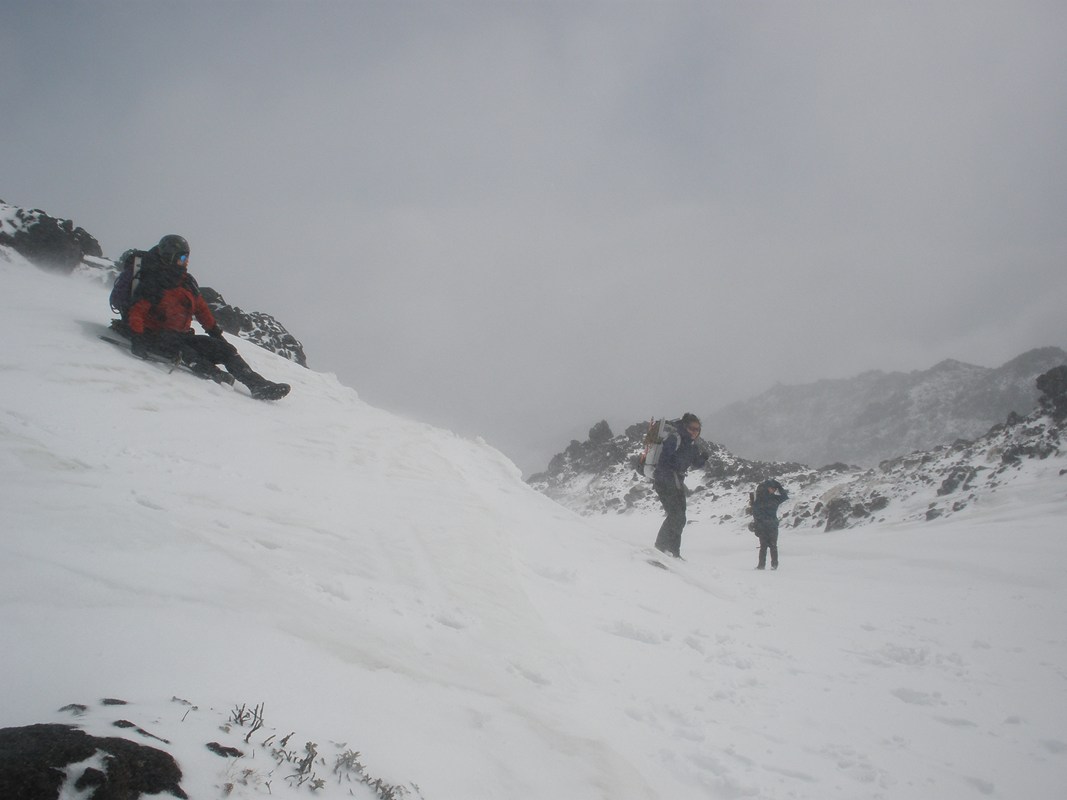
The following day brought some miserable weather. Given we needed to get back to Welly and Michael had some concerns about his car, we opted not to go up to the snow again. Rather, we just practiced some finicky ascend-descend-ascend rope scenarios. These are always tricky and the main focus is just ensuring you always maintain two points of safe connection to the rope, rather than getting it perfect.
When we got down to the carpark, we found that Michael’s car had no oil on the dipstick. On the way up, the coolant had also boiled over, which wasn’t a great sign. We figured if we at least topped up the oil it could probably limp home. So, Jackson, having the only capable vehicle at the moment, volunteered to do an oil run down the mountain. It seems the oil wasn’t that low since 1L seemed to do the trick. And the car wasn’t that bad off yet, since it did make it back to Welly.
All in all, the course seemed to be a success. Kat and I did some peer instruction and passed some skills along. Now, we hopefully have 8 more people in the club with some skills to share. These 8 should pass the skills on, and get even more people out there. Hopefully this one trip will be a nucleus from which many others will form.
Now I turn to you, the reader. Perhaps you could try to pick up some of these skills for yourself. Or perhaps you have skills to share yourself? If you do, you could pass them on and seed some trip-creating knowledge. Or maybe you just have an interesting trip you’ve wanted to post for a while. I encourage you to share your ideas with your club community; through posting trips and gaining experience you can make the club stronger, more diverse, interesting, and ambitious. Raise the ceiling on what’s possible in a university tramping club!